
Premier League 2018/2019 Teams That Created Chances but Failed to Score: A Statistical View
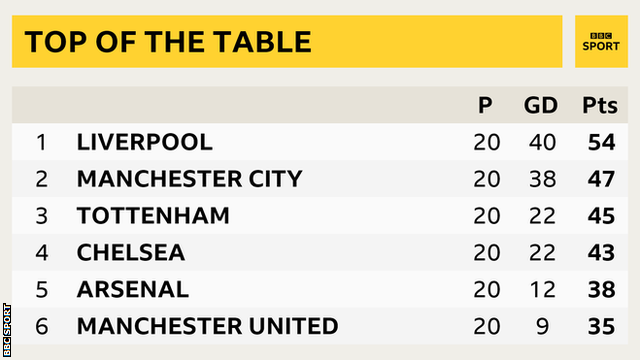
In the 2018/2019 Premier League season, several clubs regularly arrived in good shooting positions yet came away with fewer goals than their chance volume suggested. That gap between opportunity and output is exactly where statistical tools, especially expected goals, help separate genuine attacking quality from finishing problems, randomness, or systemic flaws.
Why “create a lot but score little” is a meaningful pattern
It is tempting to say that any team failing to convert chances is simply unlucky, but over a 38-game season, repeated underperformance usually points to deeper issues. From a statistical perspective, a side that consistently produces a healthy expected goals figure but lags behind in actual goals is signalling either finishing inefficiency, poor shot selection, or strong goalkeeping from opponents across the sample. That gulf matters because it reveals teams whose league position and goal difference understate their underlying attacking process, as well as others whose shot volume hides low-quality attempts that were never likely to yield many goals.
How expected goals frames chance creation in 2018/2019
Expected goals, or xG, assign a probability to every shot based on variables such as location, angle, body part, and whether the situation counted as a big chance. Summing those probabilities across a season gives an estimate of how many goals a team should have scored on average if its finishing was “normal” for the quality of shots taken. When actual goals fall well short of that xG total, analysts talk about underperformance, suggesting that the team created many good positions but lacked composure, shot placement, or perhaps the type of forwards who turn half-chances into goals.
In 2018/2019, public xG dashboards showed clear gaps for some mid-table and lower-half teams that generated decent xG but finished with modest goal tallies. While top clubs largely aligned or even slightly overperformed their expected numbers thanks to elite forwards, those mid-tier sides provided classic examples of high chance creation not translating into the scores the underlying metrics implied.
Typical team archetypes that underperformed their chances
Teams that fall into the “create plenty, score too little” category usually share certain structural features. Often, they have midfielders and full-backs capable of progressing the ball into good areas, reaching the edge or inside of the box regularly, but lack a prolific central striker to finish those moves. Another common pattern is reliance on volume shooting from suboptimal positions—plenty of efforts from outside the box or tight angles—which inflate shot counts and even basic “chances created” metrics without meaningfully lifting the probability of scoring.
Over 2018/2019, some relegation-threatened and mid-table sides were repeatedly described as playing “good football without results,” a qualitative label that aligned with quantitative signs of chance creation and low conversion. Those teams typically sat below the top six yet showed competitive xG figures, indicating that their approach to progressing the ball was sound, but key attacking decisions or finishing quality blocked that work from converting into the goals needed to climb the table.
Mechanisms behind persistent underperformance
There are several mechanisms that turn strong chance creation into disappointing scorelines rather than occasional bad luck. Strikers lacking confidence can take extra touches or choose the wrong finish, turning high-xG moments into routine saves, while wingers who cut inside and shoot from distance may prioritize volume over quality, dragging overall conversion down. Tactical instructions can also play a role; teams that attack quickly but commit few players into the box often end up with the ball arriving to poorly positioned shooters, lowering the effective value of what looks, on paper, like a “created chance.”
Comparing chance volume, xG, and actual goals
To make the concept practical, it helps to think in terms of three connected metrics: raw chances created, expected goals, and actual goals. A side near the top of the league for chances created but with only middling xG might be delivering a high number of low-value shots, indicating that the underlying opportunity quality is not truly strong. By contrast, a team whose xG total is robust but whose actual goals lag remains a cleaner case of finishing underperformance rather than inflated statistics from speculative efforts.
In 2018/2019, analysts reviewing actual-versus-expected goal charts noted a handful of clubs sitting noticeably below the “line of best fit,” meaning they scored fewer goals than the model would anticipate from the quality of their shots. Those underperformers became candidates for regression—eventually scoring more as finishing normalized—or for targeted criticism of their attacking personnel and decision-making. For bettors and analysts, the key was identifying whether the gap looked temporary or rooted in persistent structural issues.
A simple table to classify 2018/2019 attacking profiles
Even without exact team-by-team numbers in front of you, a conceptual table helps frame how different profiles behaved in 2018/2019:
| Profile type | Chances created (volume) | Expected goals (xG) | Actual goals vs xG |
| Clinical elite attacks | Medium to high | High | Equal or overperformed |
| Wasteful creators | Medium to high | Medium to high | Underperformed |
| Blunt, low-volume offences | Low | Low | Roughly in line |
Clinical elite attacks, mostly among the top sides, turned good chances into goals at or above expected levels, reflecting both quality and finishing talent. Wasteful creators, typically in mid-table, generated a reasonable xG but finished below it, which is exactly the group implied by “create a lot but don’t score enough.” Blunt offences, usually near the bottom, took too few shots or created too little xG to complain about conversion, because their issue was opportunity scarcity more than finishing.
How a statistical view shapes betting and evaluation decisions
From a statistical perspective, teams that underperform their xG are interesting because their future results often look better than their current scorelines suggest. If the process of generating good shots remains intact, finishing tends to regress toward more normal conversion rates over time, turning narrow losses into draws or wins as a few more chances are finally taken. That dynamic means the market can occasionally undervalue those sides, especially if public sentiment is anchored on recent results rather than deeper metrics, opening short-term opportunities around win–draw–win, handicap, or goal-related prices.
However, the reverse can also be true when narratives focus too heavily on “unlucky” teams. If a club’s underperformance is clearly tied to limited attacking talent, injuries to key forwards, or tactical patterns that keep good shooters away from the best zones, there may be no strong reason to expect a quick correction. In those cases, sticking purely to xG versus goals without context risks overestimating their chances of improvement.
Positioning UFABET within a data-informed approach
For someone trying to apply these ideas in practice, the key is to build a routine where numbers guide decisions rather than anecdotes. A structured method might involve tracking which teams consistently show a gap between expected and actual goals over several matchweeks, then evaluating upcoming fixtures to see whether opponent quality, injuries, and tactical matchups offer a realistic path to closing that gap. When that analysis points to value, the actual act of placing a stake becomes the final step, not the starting point. Within such a framework, a bettor could route activity through เว็บ ufa168, but the critical factor would be whether each selection satisfies pre-set criteria on xG, chance quality, and price, making the service a conduit for a carefully reasoned strategy rather than a place to chase narratives about “unlucky” teams.
How casino online ecosystems interact with stats-led thinking
The emergence of broader digital gambling environments has made it far easier to pair advanced metrics with a wide variety of football markets. Someone who follows xG dashboards and chance-creation charts can move from analysis to execution quickly, scanning goal lines, handicaps, and player markets before deciding whether any edge suggested by the numbers is still present in the odds. In that context, a casino online setting may serve as one of several hubs where the user checks multiple sports sections, compares prices, and then decides whether a perceived underperformer actually justifies backing or opposing in the next match.
The risk, however, is that the same environment encourages diversions into unrelated forms of gambling that do not admit the same kind of data-driven edge. Without clear boundaries—such as a separate mental or budget allocation for statistics-based football bets—it becomes easy to dilute any advantage gained from understanding chance creation and finishing variance. A disciplined user needs to keep their stats-led decisions insulated from impulsive activity within the same account.
Failure cases in relying on chance creation metrics
Chance-creation statistics can mislead when they are not paired with shot quality and contextual information. A team might rack up many “chances created” through safe passes that lead to low-probability shots, inflating its attacking numbers while rarely stressing goalkeepers. Alternatively, a side might see its xG remain steady while a key striker carries an injury, plays through fatigue, or suffers a form slump, turning what would normally be a temporary underperformance into a longer structural issue.
There is also the problem of model disagreement: different xG providers use different assumptions and weightings, so one dataset might show significant underperformance while another sees only a minor gap. Treating any single model as infallible can therefore create false confidence, particularly when sample sizes are small or skewed by a few extreme results. Recognising that chance-based metrics are estimates, not truths, is essential for keeping their role in perspective.
Summary
Looking at Premier League 2018/2019 through a statistical lens reveals a distinct group of teams that generated plenty of chances yet failed to convert them into a proportionate number of goals. Expected goals frameworks show how those sides underperformed the quality of their opportunities, turning strong buildup play into underwhelming scorelines. For analysts and bettors, the value lies in distinguishing temporary finishing variance from deeper structural issues, integrating xG, chance quality, and context into a disciplined routine rather than relying on raw chance counts or narratives about bad luck alone.