
The Best Wi-Fi Routers in 2026: Top Picks for Every Home and Budget
Filipinos spend an average of 8 hours and 52 minutes per day on the internet (significantly higher than the global average of 6 hours and 38 minutes). The Philippines ranks globally between 52nd and 56th for fixed broadband and between 62nd and 70th for mobile broadband.
In 2026, with Wi-Fi getting better and more places having fiber internet, picking the right router really matters. It can make your speed and coverage way better. There’s something for everyone, made for gaming or whole-house mesh systems.
The way we use the internet has changed. From 4K and 8K streaming to video calls and smart home devices, plus online gaming, the modern home is asking for more from its network than ever before. And at the center of it all is your router, so in 2026 not all routers are made equal.
Whether you are upgrading a sluggish old unit or you are setting up something new from scratch, this guide breaks down the best Wi-Fi routers available today.
Learn how to a find a reliable Wi-Fi router that deliver the best value, coverage, and performance that can help you build a home network that meets your needs today
Why Your Router Matters More Than Ever
Most people never think about their router until something goes off. Like buffering, those dead zones that show up out of nowhere, or a connection that drops right in the middle of a video call exactly when you can least afford it.
The global home router market is moving fast, and it’s projected to add around USD 3.34 billion between 2024 and 2029, roughly at an 8.5% compound annual growth rate. The reasons are pretty obvious: more streaming happening all the time, more IoT devices piling in, and the whole permanent hybrid work routine that really wants dependable, fast internet right from home.
A modern router isn’t just a box that shares your connection anymore. It’s basically the backbone of your whole digital routine, day to day.
What to Look for in a Router in 2026
Before getting to the top choices, here are some key Wi-Fi features to know.
Wi-Fi Standard: Wi-Fi 7, also called 802.11be, should be around by 2026. It promises really fast speeds up to 46 Gbps and adds multi-link operation. This lets devices hook up to more than one band for a steadier connection. For now, though, Wi-Fi 6 and Wi-Fi 6E do the job well and won’t break the bank.
Frequency Bands:
- 2.4 GHz Longer range, slower speeds. Best for smart home sensors and IoT devices.
- 5 GHz Faster speeds, shorter range. Ideal for laptops, phones, and streaming.
- 6 GHz (Wi-Fi 6E/7) The newest band, offering a clean, interference-free lane for gaming, VR, and ultra-HD streaming.
Best Wi-Fi Routers in 2026: Our Top Picks
1. TP-Link Deco BE63 – Best Overall
Best for: Most homes | Wi-Fi Standard: Wi-Fi 7
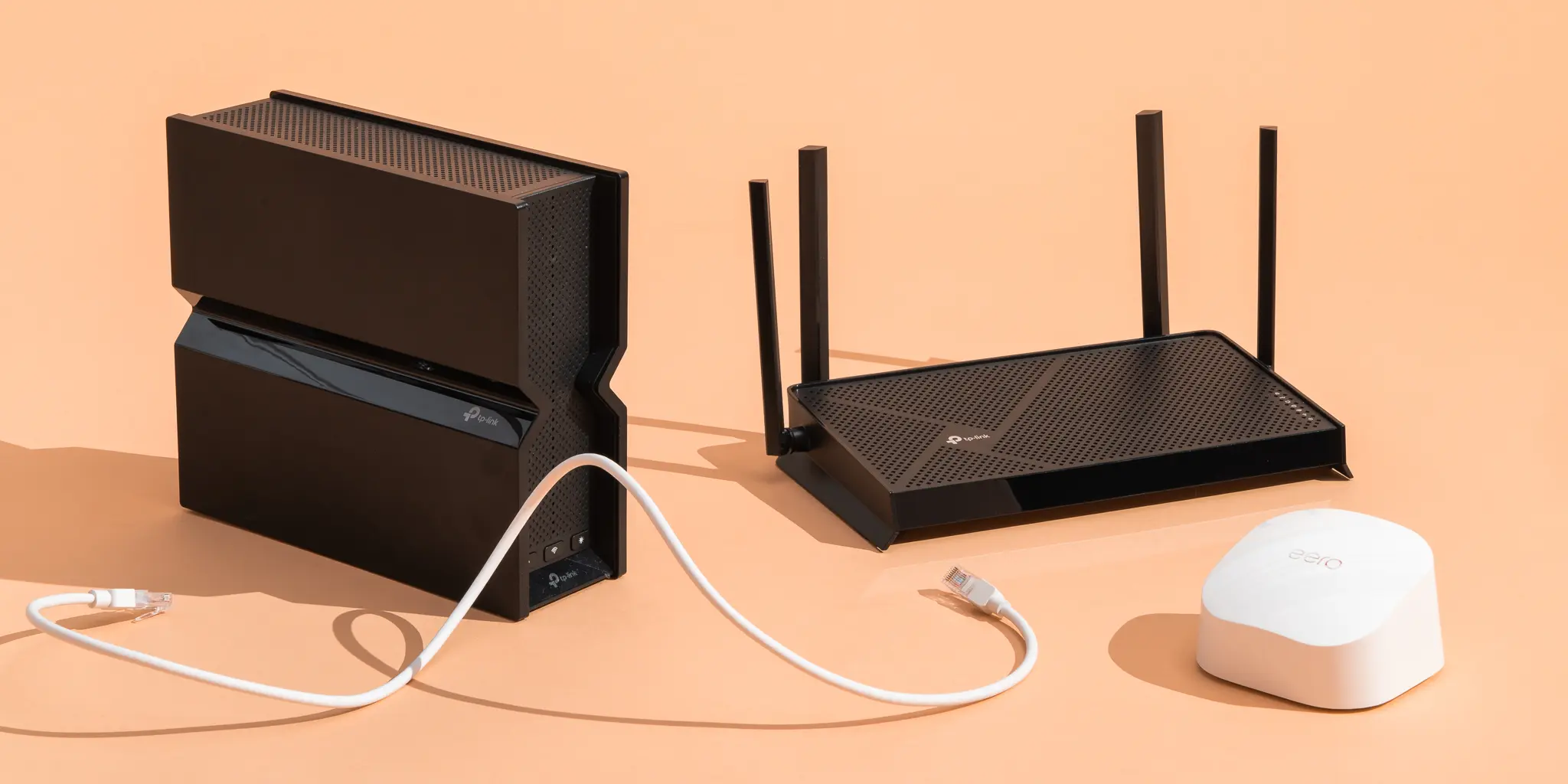
TP-Link Deco BE63 is rated the best router of the year 2026. This device supports excellent Wi-Fi 7 speeds on all three frequency bands of 2.4 GHz, 5 GHz, and 6 GHz, which ensures consistent connectivity. It includes free content filtering for parents and supports smooth roaming across nodes in a mesh setup. Some advanced features need a subscription, yet the “open the box and go” option suits most people just fine.
Why it stands out: Strong Wi-Fi 7 performance, family-friendly controls, and great value.
2. ASUS ZenWiFi BQ16 Pro – Best Mesh Router
Best for: Large homes and heavy users | Wi-Fi Standard: Wi-Fi 7
If you’ve got a big house or deal with tricky networks, check out the ASUS ZenWiFi BQ16 Pro. It rules as a mesh solution. It also comes with a 10 Gbps port for wired connections. In addition, it is excellent at performing up to 5,500 square feet and is capable of outstanding 6 GHz performance.
Why it stands out: The overachiever of the Wi-Fi 7 world, powerful, feature-rich, and built to last.
3. TP-Link Archer AXE75 – Best Mid-Range Pick
Best for: Most homes on a budget | Wi-Fi Standard: Wi-Fi 6E
Why not just forget about Wi-Fi 7? The TP-Link Archer AXE75 router is a good choice, around $150. It provides tri-band Wi-Fi 6E, and the speeds are quite realistic – somewhere around 800 and 1,200 Mbps. Also, it works fine with 2022 gadgets. Configuration using the Tether app goes pretty smoothly. It can handle over 50 connections without breaking a sweat, so it’s a good option for crowded environments and device-heavy households.
Why it stands out: The best balance of speed, coverage, and value available today.
4. TP-Link Archer GE800 – Best for Gaming
Best for: Gamers | Wi-Fi Standard: Wi-Fi 7
Gamers actually need low delay, steady throughput, and traffic that is prioritized, not simply “fast internet.” The TP-Link Archer GE800 hits all those notes at once. It comes with a feature bundle that’s really suited for both hardcore and more laid-back gaming.
You get a dedicated gaming dashboard, along with QoS controls for sorting and prioritizing gaming traffic. It also runs a tri-band Wi-Fi 7 setup, keeping gameplay smooth and stable during congestion.
Why it stands out: A purpose-built gaming router that does not compromise on general home performance either.
5. MSI Roamii BE Pro – Best Budget Mesh Router
Best for: Budget-conscious buyers | Wi-Fi Standard: Wi-Fi 7
The MSI Roami BE Pro shows that dependable Wi-Fi 7 mesh coverage can be pretty affordable, you know. It has solid performance along with useful bits and pieces, so it’s a nice upgrade from those older Wi-Fi 5 routers. Also, it supports future-ready home networking but still doesn’t drain your wallet much.
Why it stands out: Wi-Fi 7 mesh performance at a budget-friendly price.
Single Router vs. Mesh System: Which Do You Need?
| Situation | Recommended Setup |
| Apartment or small home (under 1,500 sq ft) | Single high-performance router |
| Medium home (1,500–3,000 sq ft) | Single powerful router or 2-node mesh |
| Large home (3,000+ sq ft) or multi-story | Mesh system (3+ nodes) |
| Thick concrete or brick walls | Mesh system |
| Wired backhaul available | Mesh system with Ethernet backhaul |
Mesh systems use seamless roaming tech, so your device stays connected to the closest node without losing signal, perfect for calls and games.
Wi-Fi 6E vs. Wi-Fi 7: Which Standard Is Right for You?
Wi-Fi 6E routers will remain popular by 2026, costing around $80 each. The good thing about them is that they easily connect numerous devices and have speeds ranging from 800 to 1,200 megabits per second. You will enjoy streaming without interruptions, working from home, and playing amazing games.
For super quick internet and speedy file transfers, Wi‑Fi 7 is the better option. You can usually find it priced around $250, so it delivers strong output. While device compatibility is slowly expanding, it’s becoming more common, yet it’s not everywhere just yet.
In case you’re still relying on your old Wi-Fi 5 router, consider getting an upgrade. Modern options such as Wi-Fi 6E or Wi-Fi 7 would be much better because technology has evolved since 2019. They really boost your experience.
Final Thoughts
Your router is the base plate of your home internet. So, choosing the right one in 2026 really comes down to what you can spend, how big your place is, and what connections you actually require.
You might land on a Wi-Fi 6E router if it’s a smaller apartment or a Wi-Fi 7 mesh setup for a larger house, and either way the “correct” choice should help you keep fast rates, reliable reach, and a smoother time for all your devices, not only one or two.
If you’ve got an older unit, like three years or more, then any new model will bring meaningful improvements. You should see better throughput, stronger coverage, plus added security tools that are built right in.